
AL SHIRA’AA The global equestrian powerhouse helping shape the future of the sport
In modern equestrian sport, few names carry the same influence, ambition and international presence as Al Shira’aa. From Olympic ambitions and elite showjumping to breeding programmes, grassroots investment and the preservation of some of Britain’s most iconic equestrian venues, Al Shira’aa has rapidly become one of the most significant driving forces within the global horse world.
But behind the sponsorship banners, international partnerships and world- class horses sits something much
more personal: a genuine passion for horses, horsemanship and the future of equestrian sport.
Following our interview with Nina Barbour regarding Bolesworth International and the future of British equestrian sport, one name repeatedly surfaced throughout conversations around modern equestrian development: Al Shira’aa. With growing involvement at Bolesworth, Hickstead and major international events across Europe
and the Middle East, the organisation is now playing a major role in shaping what modern equestrian sport looks like both in Britain and internationally.
At the centre of much of that operation is Sami Kettle, Manager of Global Operations for Al Shira’aa. Based near Hickstead at Al Shira’aa Stables, Sami oversees an enormous and varied operation involving:
young horse production,
breeding programmes,
the Al Shira’aa Tour,
international event management,
and the UAE Olympic team alongside trainer and Chef d’Equipe William Funnell.
But despite the scale of the operation today, the story itself started remarkably simply. With one horse. And one conversation.
“I turned up at a palace.”
Sami’s relationship with Her Highness Sheikha Fatima bint Hazza bin Zayed Al Nahyan began more than fourteen years ago.
“I was very fortunate because I went to school with Sheikha’s brothers and sisters,” Sami explains.
“One day she asked me if I could
look at a horse. I turned up at a palace.” The horse itself was safe and suitable, but what mattered far more was the relationship and shared vision that developed afterwards.
“This is how everything started.”
At the time, Sheikha Fatima already had a deep passion for horses rooted within her family history and Emirati culture.
Her father rode endurance horses. Her grandfather had a huge passion for Arabian horses. And she herself had ridden from a young age. But beyond simply owning horses, there was a much bigger ambition: to elevate UAE equestrian sport onto the international stage properly.
“She wanted to make an impact,” Sami says. “There was talent in the UAE, but there wasn’t the horsepower.”
That vision would eventually lead to the UAE reaching the Olympic Games after more than a decade of investment, planning and development.
“It took twelve years, but she did it.” And importantly, the ambition was never simply about buying success.
Instead, Al Shira’aa became increasingly focused on creating long-term systems: developing riders, supporting young talent, improving horse welfare, investing in breeding and building proper infrastructure within the sport. “She wanted to educate people that we had to start producing horses, not just buying ready-made horses.”
That philosophy now sits at the centre of the organisation.
Today, Al Shira’aa has bred and produced horses competing at top international level, while supporting elite riders, championships, venues and grassroots initiatives worldwide.
More than sponsorship
While Al Shira’aa is now associated with some of the biggest equestrian events in the world, Sami is clear that the organisation sees itself as much more than simply a sponsor.
“We are different. We are family.” That team culture is something she repeatedly returns to throughout the conversation. From riders and trainers to grooms, farriers and support staff, the emphasis appears to sit heavily
on unity and long-term development rather than individual stardom.
“The team spirit means the most,” she says. “We train together, live together, eat together and work
under one system.” That close-knit environment is particularly important within the UAE squad system.
“One young rider gets nervous and the others lift him up.” It is perhaps a very different image to the highly individual nature often associated with top-level equestrian sport. And behind the scenes, the scale of the operation is enormous.
Al Shira’aa now works with internationally respected names including Duncan Inglis and William Funnell, while overseeing young horses from foals through to Grand Prix and championship level. “A lot of the horses I’ve seen growing up from foals,” Sami explains. “When they then go into the ring and perform well, it’s magical.”
Supporting Bolesworth and British equestrian sport One of Al Shira’aa’s most visible UK partnerships in recent years has been with Bolesworth International. For Sami, the attraction was immediate. “Heritage,” she says simply. “There is so much history there.” Much like Hickstead, Bolesworth represents something Al Shira’aa values enormously: preserving iconic venues while helping modernise and grow the sport around them.
The partnership with Nina Barbour and Bolesworth has helped elevate the show to four-star level while also strengthening its international appeal. And importantly, Sami believes major venues like Bolesworth play a critical role in keeping equestrian sport relevant and accessible.
“We are trying to bring the sport to the people.” That phrase repeatedly emerges throughout the conversation.
Accessibility.
And another, Opportunity.
Creating environments where younger riders, grassroots competitors and future generations can feel part of the sport rather than excluded from it. Because while top-level equestrian sport may appear glamorous from the outside, Sami is honest about the challenges currently facing British equestrianism.
“There aren’t enough international shows in the UK,” she says. Brexit has also created major logistical and financial pressures for teams travelling throughout Europe. “The UK is our home base, but it is getting very costly.” And despite Al Shira’aa’s investment within the sport, Sami is quick to stress that modern equestrian sport simply cannot survive without strong partnerships between venues, sponsors and organisations.
“Without sponsors and partners, we cannot run.” That reality perhaps becomes increasingly important as the costs associated with elite equestrian competition continue rising dramatically worldwide.
Preserving the history of the sport
Alongside Bolesworth, Al Shira’aa has also become heavily associated with Hickstead and the preservation of some of Britain’s most historic equestrian traditions. “Sheikha fell in love with Hickstead,” Sami says. The organisation has since become one of Hickstead’s major supporters, helping preserve internationally recognised classes and maintaining the prestige of historic British showjumping.
“She wants to keep the history alive.” That commitment to heritage comes directly from values passed down through generations within Sheikha Fatima’s family.
“Her grandfather always said: ‘You must go back to history and keep
it alive.’”
For Sami, preserving those traditional events while simultaneously modernising the sport is absolutely vital. Because although equestrianism continues evolving rapidly through technology, social media and global investment, its history still matters enormously. And perhaps that balance between heritage and innovation is exactly what organisations like Al Shira’aa now represent.
Horse welfare, young riders and the future
One of the strongest themes throughout the conversation is horse welfare.
Sami speaks passionately about improving standards internationally and ensuring welfare remains central to the future of equestrian sport. “This is a sport and we love the horse,” she says. “What horses give back to us is more than what we can ever give them.”
That focus now extends across:
stewarding,
judging,
training systems,
youth development,
and grassroots investment.
In particular, Sami believes youth pathways are absolutely essential if equestrian sport is to remain strong internationally.
“There still needs to be more grassroots support.” She points to Britain’s successful youth systems and Nations Cup structures as examples of how strong rider development can create long-term international success. And importantly, she believes accessibility must improve.
Not simply for elite riders. But for younger riders, developing riders and people trying to break into the sport.
“We need more accessibility.” That applies not only to competitions themselves but also to exposure, opportunity and visibility.
And in a modern sporting world increasingly driven by digital media, Sami believes social media now plays a vital role in shaping equestrian sport globally.
“When I was younger, I used to go out and buy Horse & Hound every week,” she laughs. “Now we have to move with social media.”
“People underestimate how hard it is.”
Despite the glamour often associated with international equestrian sport, Sami is very honest about the pressures behind the scenes. “One thing people misunderstand is how hard it is.”
There remains a common assumption that major sponsorship automatically removes pressure or financial strain. In reality, she says, the opposite is often true.
“It’s a massive expense. And with success comes pressure.” Al Shira’aa receives constant requests for support, sponsorship and involvement throughout the industry.
But ultimately, the organisation remains deeply focused on building sustainable systems rather than simply chasing headlines. And perhaps that is why Al Shira’aa’s influence now feels so significant. Because rather than simply attaching its name to events, the organisation appears genuinely invested in:
rider development,
horse welfare,
preserving heritage,
growing accessibility, and strengthening the long-term future of equestrian sport internationally.
As equestrianism continues evolving globally, organisations like Al Shira’aa are increasingly shaping what that future will look like. And judging by the scale of their ambition, involvement and investment so far, this may only be the beginning of Al Shira’aa’s influence on the sport.
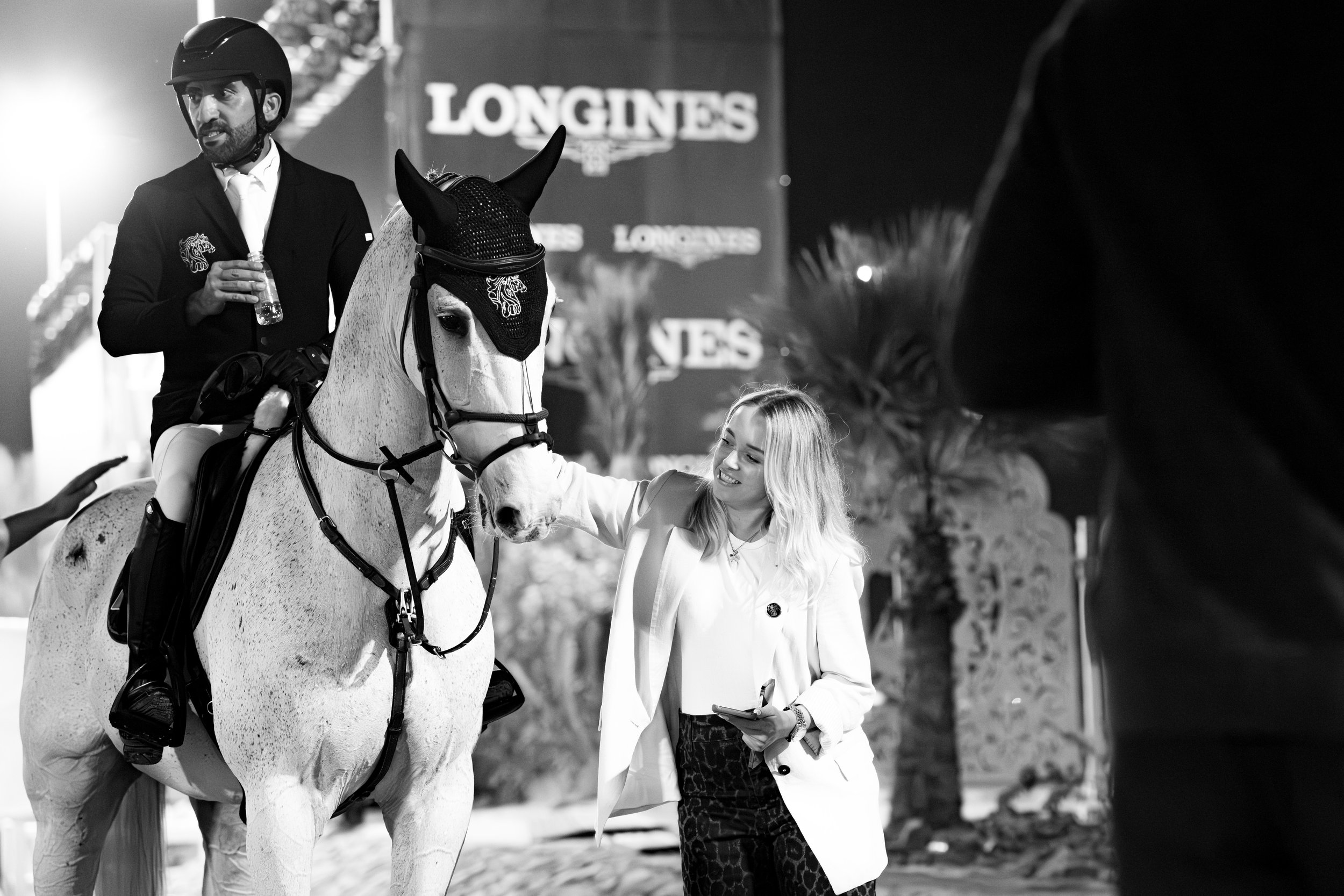
"What horses give back to us is more than what we can ever give them." - Sami Kettle
Everything Horse magazine | Issue August / July | Page 17